
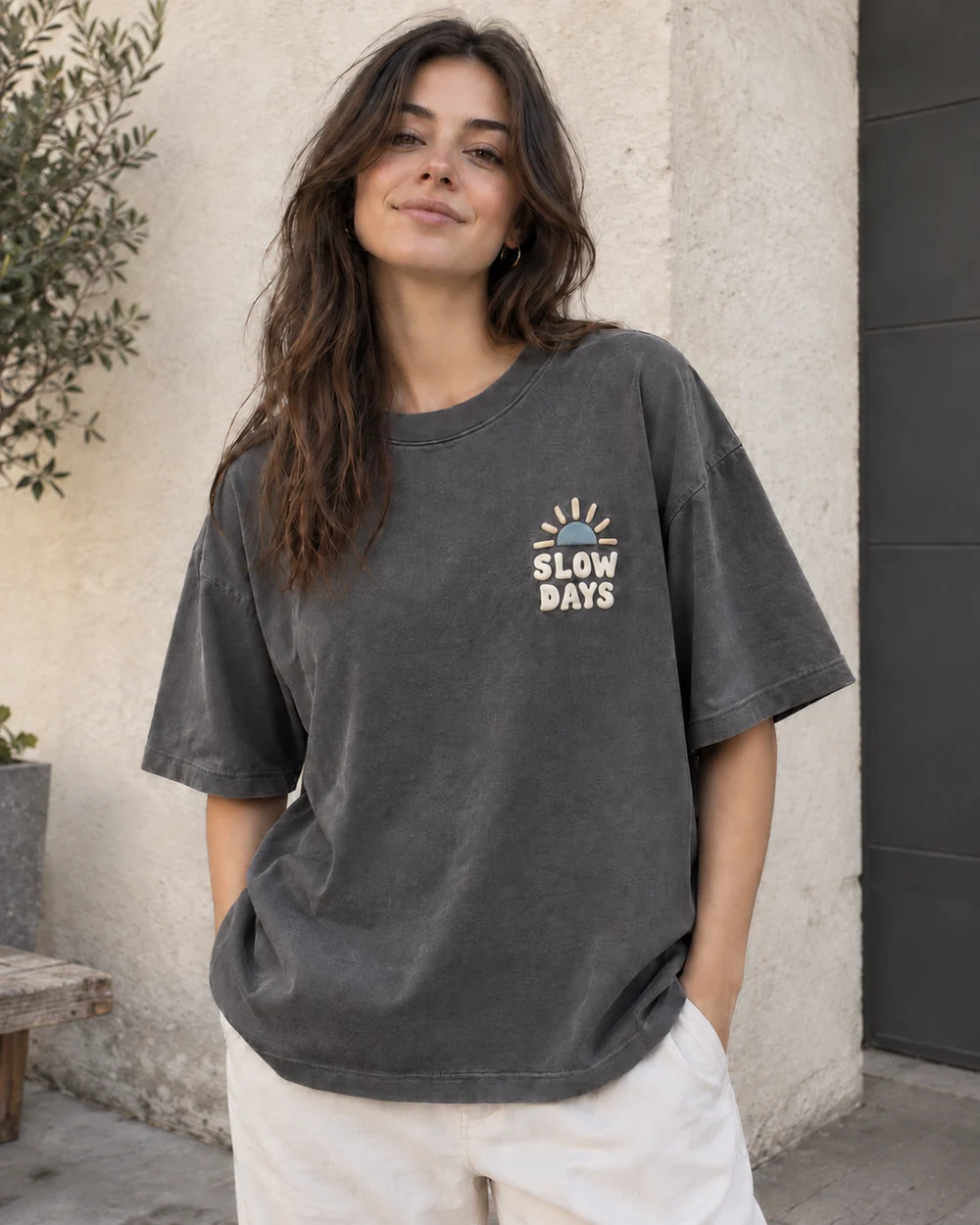
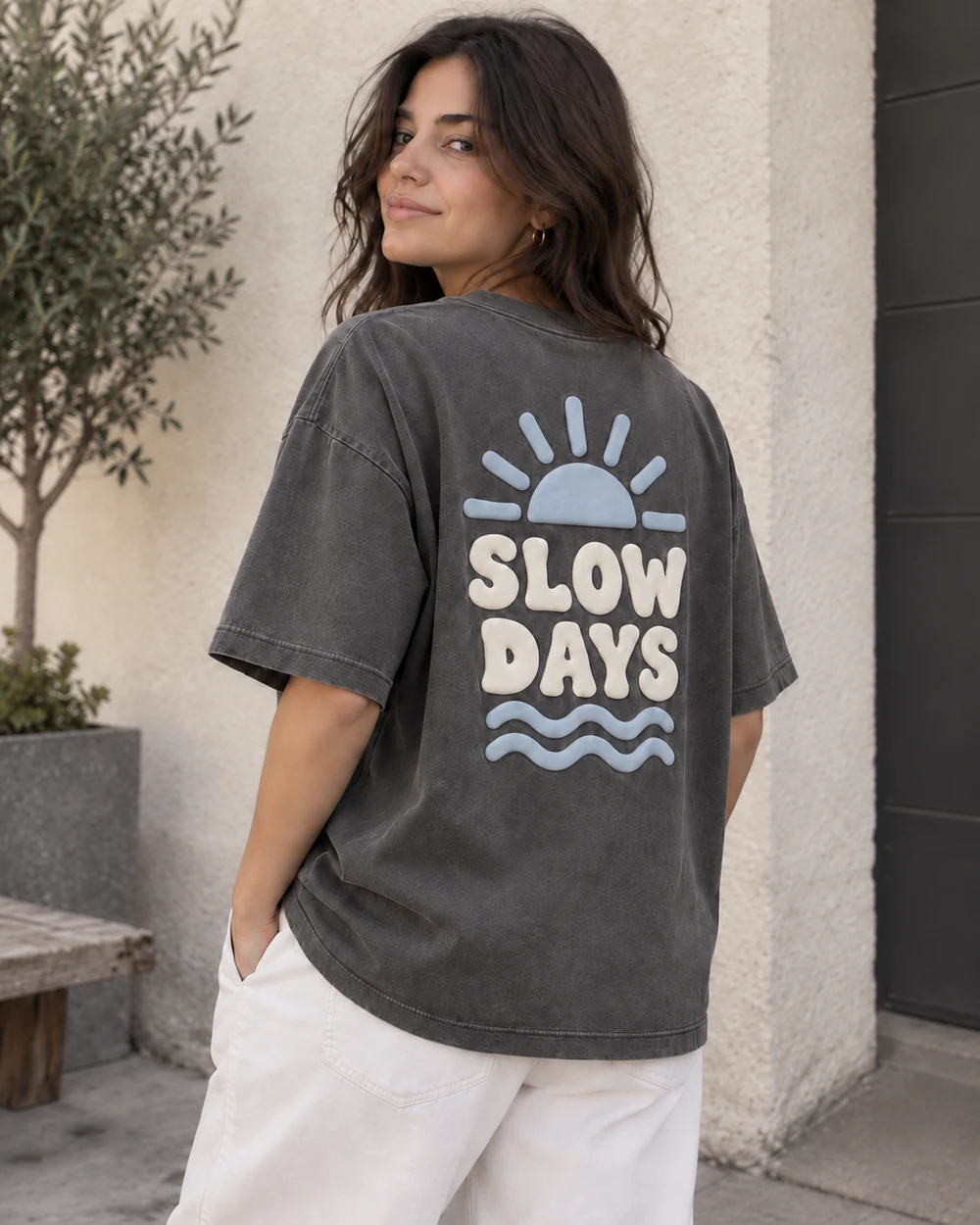
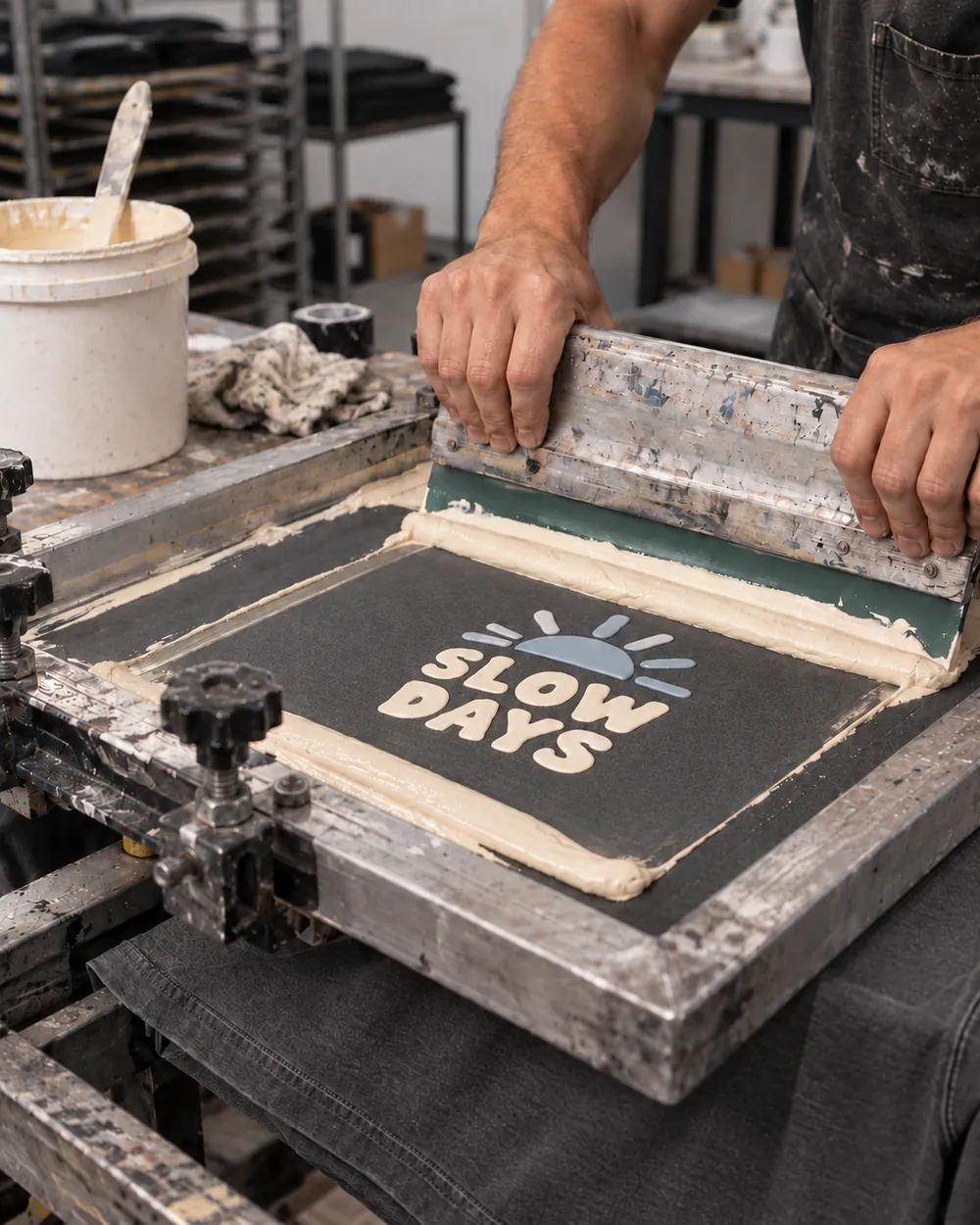
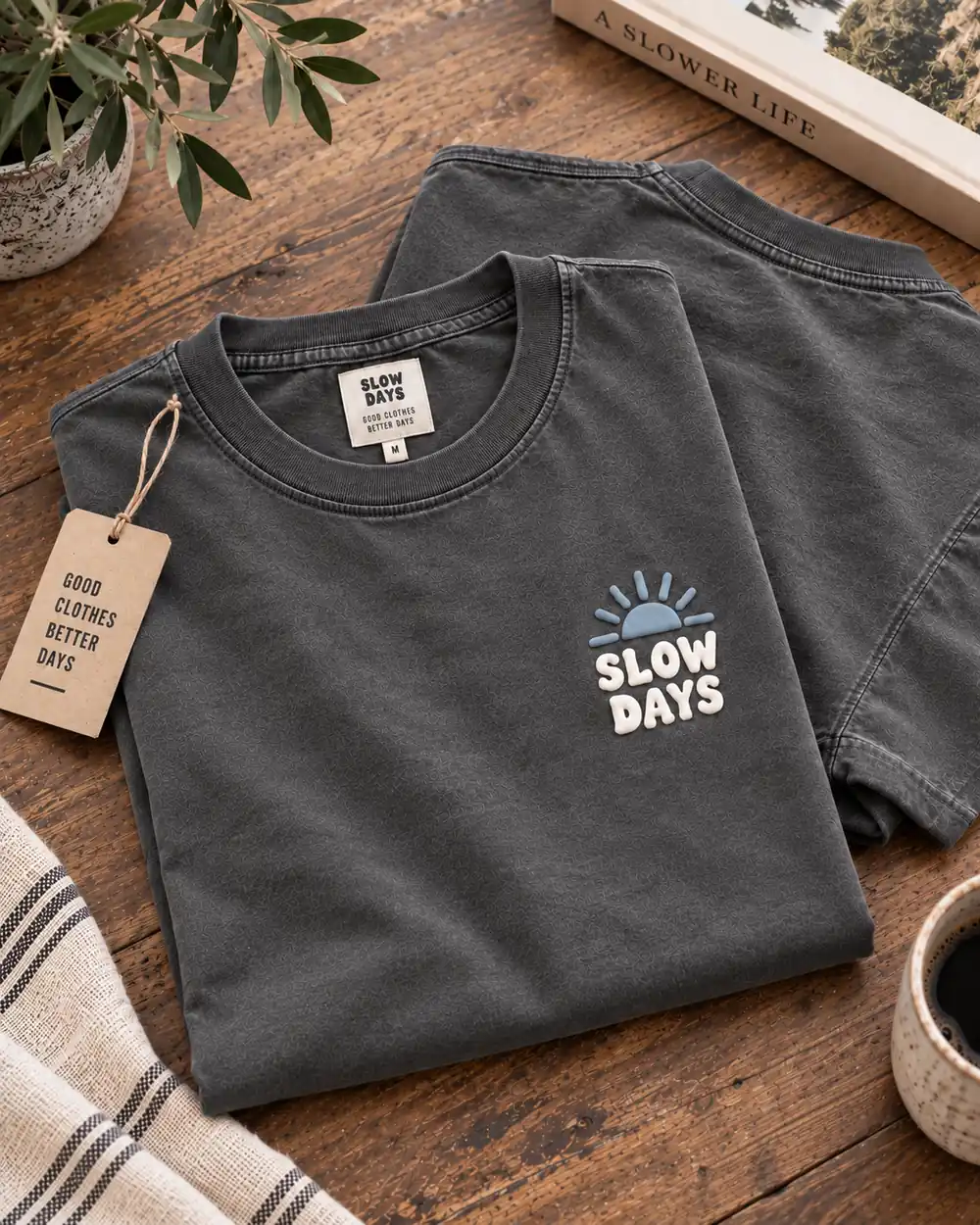
As a custom puff print T-shirt manufacturer, YX Custom Clothing develops raised-print T-shirts for fashion brands, streetwear labels and private label projects. We can work from your artwork, tech pack, reference sample or design concept, then test the garment and puff print together before bulk production.
Puff printing creates a raised surface after the printed ink is activated by heat. The finished effect depends on more than the ink itself. Artwork shape, line width, spacing, fabric surface, ink deposit and curing conditions all influence how evenly the print expands and how clean the final graphic looks.
A design that works well for normal screen printing does not always work equally well for puff printing.
The printed layer expands during heating, so very thin lines, tiny text and narrow gaps can lose definition. Bold lettering, simpler shapes and areas with enough spacing usually allow the raised effect to develop more clearly.
Before sampling, we normally review the artwork at its actual print size. If some areas are too fine or too close together, those details can be adjusted before screens are prepared rather than discovering the problem after printing.
The goal is not to simplify every design. It is to keep the character of the artwork while giving the puff areas enough room to expand cleanly.
A higher puff effect is not automatically a better puff print.
If the ink expands too much, edges can become overly rounded, small spaces may close and the design can start to look heavy. If the expansion is too low, the print may look almost flat and lose the visual depth that makes puff printing distinctive.
For most fashion T-shirts, we look for a controlled raised effect that is obvious from a normal viewing distance but still keeps the important shapes readable.
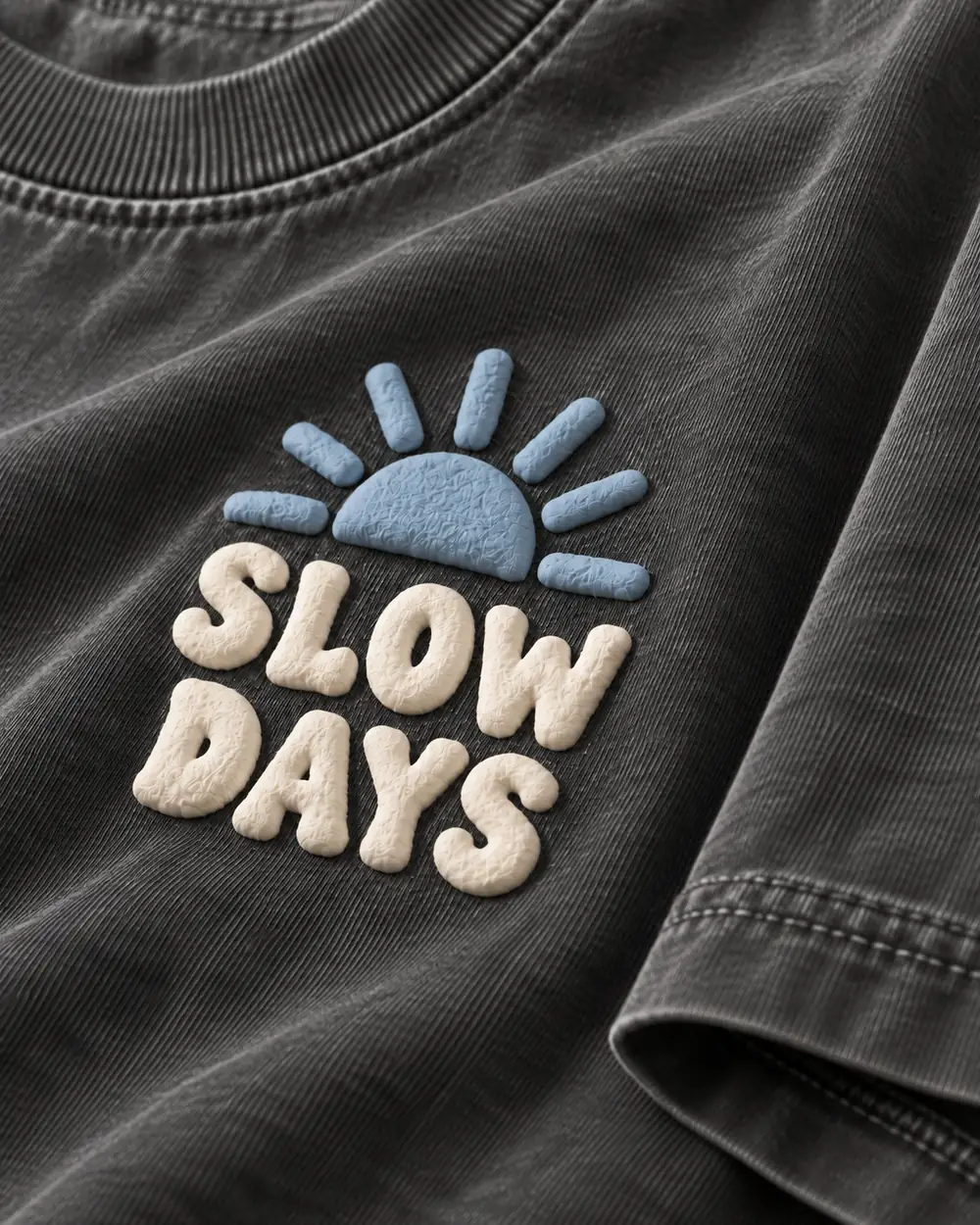
During sampling, we check the print from both the front and a slight side angle. The side view is especially useful because uneven height and surface variation are easier to see.
Puff printing does not have to use one color across the entire design.
Using two colors can separate lettering from graphic elements and make the raised areas easier to read. It also gives the design more visual interest without making the artwork unnecessarily complicated.
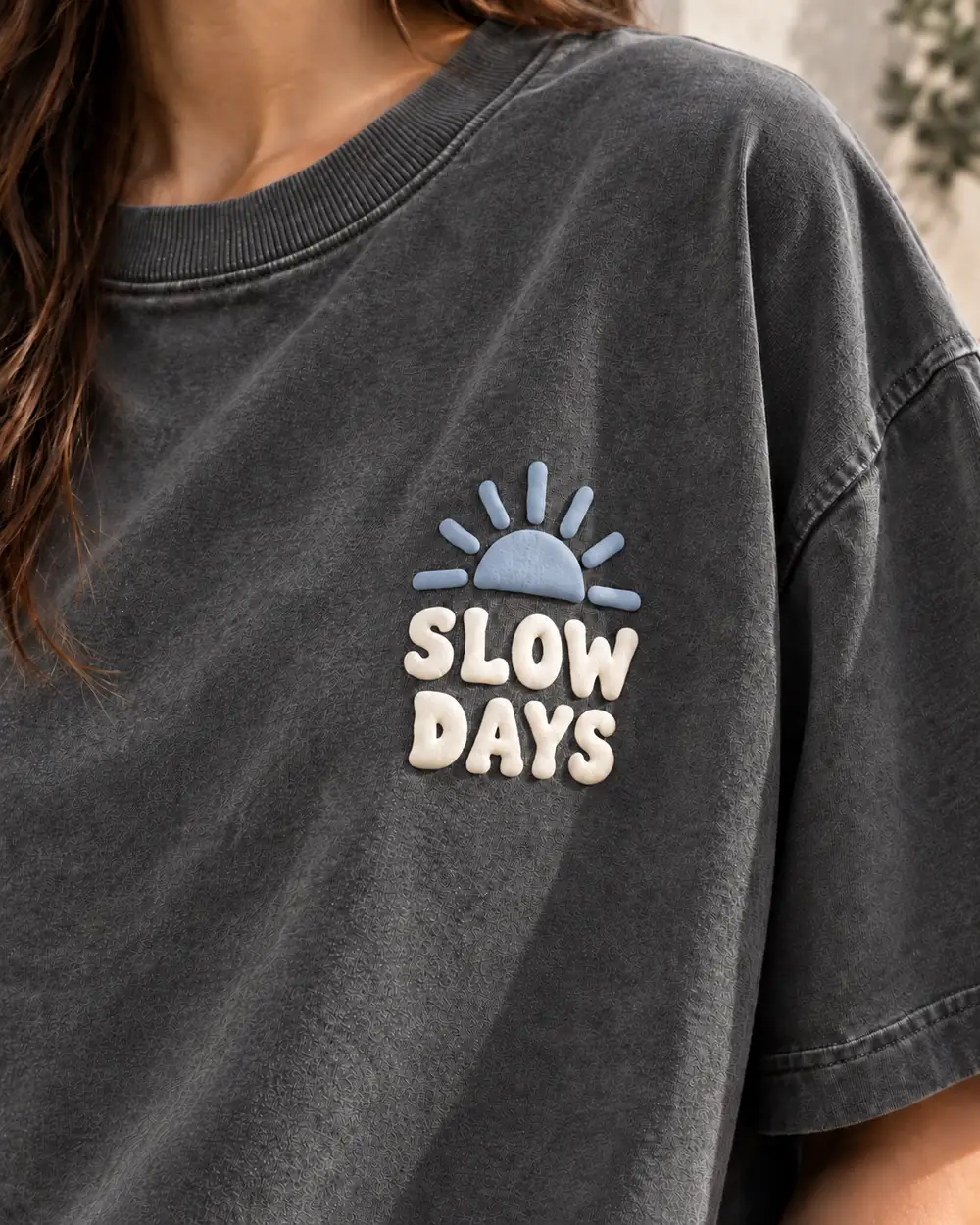
For the T-shirt shown on this page, the cream lettering and muted blue graphic elements create two distinct areas. The contrast helps the puff effect stand out against the washed charcoal fabric.
When multiple colors are used, spacing becomes more important because each raised area expands. If two colors sit too close together, the gap visible in the original artwork may become much smaller after heating.
Color separation, registration and expected expansion therefore need to be considered together before production screens are prepared.
The fabric underneath the print has a direct effect on the final appearance.
Mediumweight and heavyweight cotton jersey usually provide a stable base for raised graphics. The fabric has enough structure to support the additional print thickness without making the garment feel unbalanced.
Lightweight or highly stretchy fabrics can also be used for some projects, but the combination should be tested because the raised print adds more structure to the printed area.
Fabric texture matters as well. A smoother jersey gives the ink a more consistent printing surface, while uneven or heavily textured fabrics can change how the expanded layer appears.
For washed T-shirts, the contrast between a vintage garment surface and a cleaner raised puff print can become part of the design. This works especially well when the brand wants the garment itself to feel worn-in while the graphic still has strong dimension.
Because puff printing creates physical height, lighting and placement affect the way the design is perceived.
A small chest print can create a subtle raised branding detail. A larger front or back print makes the three-dimensional effect much more dominant and is often used for streetwear graphics.
Chest, front and back placements all have different working areas.
When a print sits close to a neckline, side seam or sleeve edge, we check the position on the actual garment rather than relying only on measurements from the artwork file.
A print can be technically centered and still look visually incorrect once the T-shirt is worn. Sampling gives us the chance to adjust the position before bulk production.
Puff print does not always need to have a perfectly smooth surface.
Depending on the ink system, artwork and design direction, the raised surface may have a softer or slightly textured appearance. On washed or vintage-style garments, a little surface character can work naturally with the overall product.
What matters more is consistency.
Large puff areas should not contain obvious sections that rise much higher or lower than the rest of the design. Important edges should remain recognizable, and the overall appearance should stay close to the approved sample.
This is why close-up inspection is useful during development.
The puff effect develops when the printed ink is exposed to heat.
If the conditions are not sufficient, the print may remain too flat. If the expansion is excessive, the surface and edges of the artwork may change more than intended.
There is no single setting that works for every design. The result depends on the ink system, fabric, print deposit, artwork coverage and the amount of expansion required for the project.
For production, the important point is not simply achieving a raised print once. The process needs to reproduce the approved height and appearance consistently across the full order.
We recommend approving a physical puff printed sample before bulk production.
A digital mockup can show color and general placement, but it cannot accurately show the final print height, hand feel or surface texture.
During sampling, the brand can check print size, placement, puff height, color combination, edge definition and how the raised graphic works with the selected T-shirt fabric.
This is especially important for larger puff prints and multi-color designs.
If the result feels too bulky, too flat or loses too much detail, the artwork or print setup can still be adjusted before the order moves into production.
Our standard MOQ for custom puff print T-shirts is 100 pcs per color.
After the sample is approved, bulk production can include:
During production, we compare the finished puff print against the approved sample.
Print position, color, raised height, edge definition and overall surface appearance are checked so the bulk order follows the direction confirmed during development.
Puff printing does not need to be the only customization used on a T-shirt.
It can be combined with flat screen printing, embroidery, garment washing, custom labels and other decoration methods depending on the design.
However, the production sequence should be planned carefully.
If a garment will also be washed or dyed, the printing and washing process should be tested together because garment treatment can affect the print surface, color and overall appearance.
Private label details such as neck labels, care labels, hangtags and packaging can also be developed around the approved garment.
Explore our custom T-shirt manufacturing options for other T-shirt styles, fabrics and decoration techniques.
Puff printing is a screen printing technique that creates a raised three-dimensional effect after the printed ink is activated by heat. The expansion gives lettering and graphic elements more height and texture than a normal flat print.
Bold lettering, simple graphic shapes and designs with enough spacing usually work well. Very fine lines, tiny text and narrow gaps may need adjustment because the ink expands during heating.
Yes. Two-color and multi-color puff designs are possible. Registration and spacing become more important because each raised area expands, so the design should be tested on a physical sample before bulk production.
Yes. Mediumweight and heavyweight cotton T-shirts are commonly suitable for puff printing because they provide a relatively stable base for the raised graphic. The actual fabric and print combination should still be checked during sampling.
Yes. Puff printing can be used for chest, front and back graphics. Print size and placement should be selected according to the garment proportions and the artwork.
Puff ink expands when heated. Very thin lines and narrow spaces can change shape during expansion, which is why some artwork needs to be adjusted specifically for puff printing.
Yes, but the print and wash sequence should be tested during development. Washing can affect print color, surface appearance and hand feel.
Our standard MOQ is 100 pcs per color. Final production requirements can also depend on the selected fabric, print size, number of colors, puff coverage and other customization details.

Share your idea, sample request, or product details with us.