


Vintage wash T-shirts are developed through more than simply fading the garment color. Fabric composition, dyeing method, wash intensity, seam construction and finishing all influence how natural and consistent the final worn-in effect looks.
As a custom vintage wash T-shirt manufacturer, YX Custom Clothing develops washed T-shirts for streetwear and fashion brands based on your tech pack, reference sample, color direction or design concept. We can adjust the fabric, garment dye and wash process together so the final sample achieves the faded color, soft hand feel and vintage character you want before bulk production.

A vintage wash effect is influenced by more than color fading alone. Fabric composition, dye penetration, wash intensity, seam construction and finishing all affect how natural the final aged appearance looks.
Common development options include:
• Soft pigment wash effects
• Faded and worn-in color directions
• Stronger fading around seams, collar, cuffs and hem
• Controlled abrasion and surface aging
• Garment dye and wash combinations
• Relaxed or regular T-shirt proportions
• Custom neckline, sleeve and body measurements
• Pre-production wash testing and color approval
Because washing can slightly change garment dimensions, surface texture and hand feel, the pattern and wash process should be evaluated together during sampling before bulk production.
The base fabric has a major influence on the final vintage wash effect. Fiber composition, knitting density, fabric weight and dye compatibility can all affect color fading, surface texture and hand feel after washing.
For vintage wash T-shirts, cotton and cotton-rich jersey fabrics are commonly used because they can develop natural faded tones and visible seam aging more consistently. Fabric weight can then be selected according to the desired drape, structure and final garment feel.
| Fabric Direction | Typical GSM | Wash Character |
|---|---|---|
| Lightweight Cotton Jersey | 180–220 GSM | Softer drape with a lighter worn-in appearance |
| Midweight Cotton Jersey | 220–260 GSM | Balanced structure and natural vintage fading |
| Heavy Cotton Jersey | 260–300 GSM | More substantial hand feel with stronger seam definition |
| Cotton-Rich Blends | Custom | Wash effect depends on fiber composition and dye compatibility |
These ranges are starting points rather than fixed specifications. The same wash recipe can produce different results on different fabrics, so we recommend testing the selected fabric, dye and wash process together during sampling before confirming bulk production.
Vintage wash T-shirts can be combined with decoration techniques that are designed to look slightly aged rather than perfectly new. Print color, ink coverage, wash treatment and placement should be considered together so the decoration matches the washed garment instead of looking added on afterward.
Common options include:
• Distressed screen printing
• Faded water-based prints
• Soft-hand screen printing
• Small chest graphics
• Back graphics with worn effects
• Embroidery combined with washed fabrics
• Garment dyeing and pigment washing
• Custom abrasion and finishing effects
For washed garments, decoration should be tested before bulk production because the wash process can change print color, surface appearance and hand feel. Sample testing helps confirm that the print and garment aging develop together as intended.
For vintage wash T-shirts, sample development should consider both the garment pattern and the wash process. Washing can affect garment measurements, surface texture, seam appearance and overall hand feel, so the sample should be evaluated after the intended wash treatment rather than only before washing.
We can develop samples from a tech pack, measurement chart, reference photo or physical sample. A typical development process includes:
• Reviewing your design reference and target wash direction
• Selecting the base fabric and garment color
• Confirming the intended fading and worn-in effect
• Developing the initial pattern
• Making the first garment sample
• Applying the selected dye and wash treatment
• Checking post-wash measurements and shrinkage
• Reviewing seam fading, surface texture and color consistency
• Adjusting the pattern or wash recipe if required
• Confirming print, label and finishing details
• Approving the final washed sample before bulk production
Sampling helps confirm that the fit, wash effect, color, shrinkage and decoration work together before the full production order begins.
See our custom clothing development process for more details on sampling, wash testing, and bulk production.
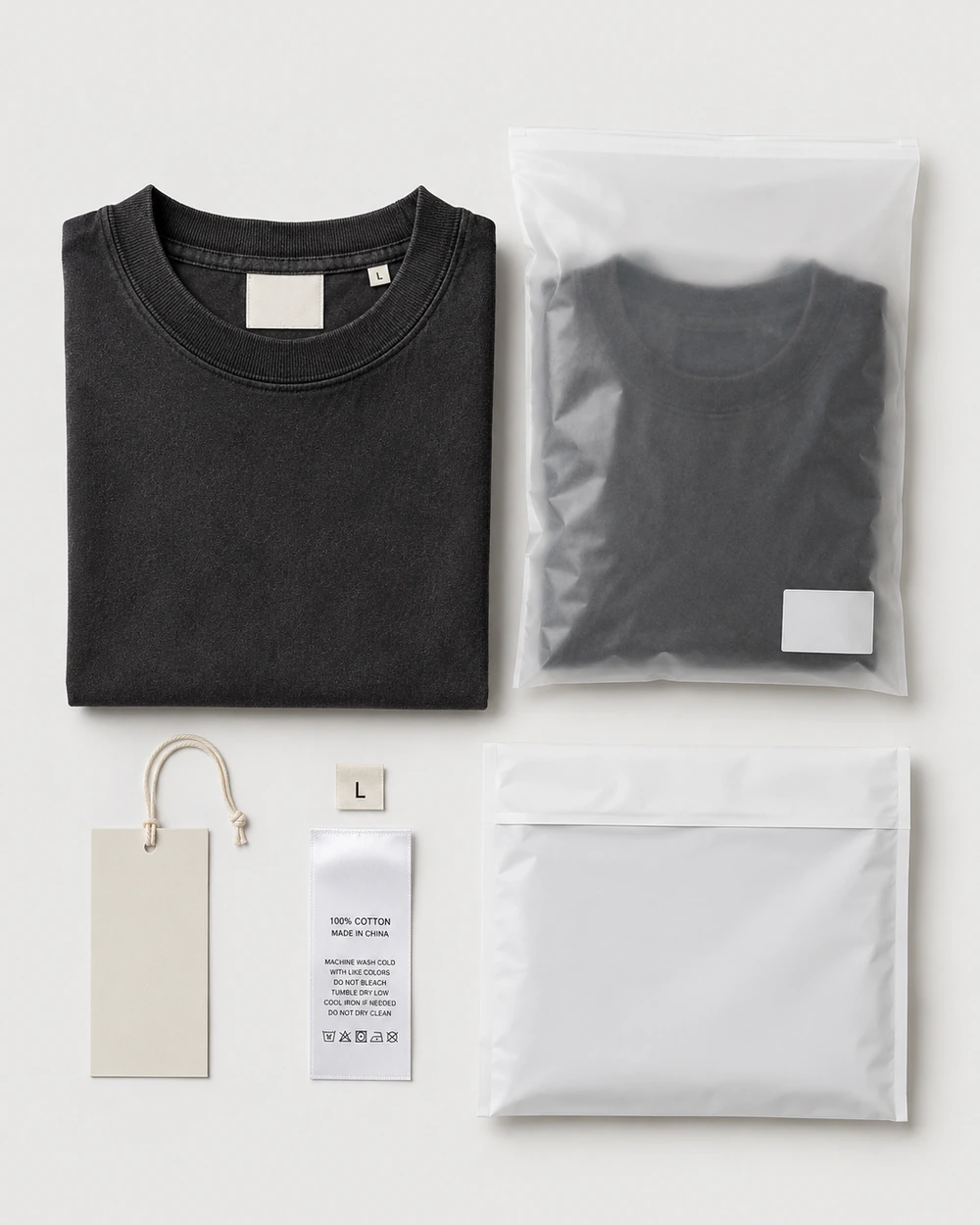
Private label details can be developed together with the vintage wash T-shirt sample so the labels, trims and packaging are compatible with the selected garment dye and wash process before bulk production.
Available options can include:
• Custom neck labels
• Size labels
• Care and composition labels
• Woven or printed labels
• Hangtags
• Custom polybags
• Barcode or SKU stickers
• Brand-specific folding and packing requirements
For washed garments, label material, print durability and placement should be confirmed before production because some labels or trims may react differently during garment dyeing and washing. Packaging is normally added after the wash and final inspection process.
Labels and packaging can be reviewed during sampling so branding, placement and packing details are confirmed before bulk production.
Our standard MOQ for custom vintage wash T-shirts is 100 pcs per color.
Sampling is recommended before bulk production so the base fabric, garment color, wash effect, shrinkage and decoration can be approved on the actual finished garment.
After sample approval, the bulk production process can include:
• Fabric sourcing and inspection
• Cutting and sewing
• Garment dyeing or pigment dyeing
• Vintage wash and fading treatment
• Printing, embroidery or other decoration
• Post-wash measurement and shrinkage checks
• Color and wash consistency inspection
• Label attachment
• Folding and packaging
• Final shipment preparation
Vintage washing naturally creates some variation between garments and production batches. We control the wash recipe, processing time and production conditions to keep the overall color and fading direction within the approved sample standard.
We can also assist with international shipping arrangements based on the destination and shipment size.
Explore our custom T-shirt manufacturing options for other T-shirt styles and customization possibilities.
Cotton and cotton-rich jersey fabrics are commonly used because they usually respond more naturally to garment dyeing, pigment washing and fading treatments. Fabric composition, knitting density and finishing can all affect the final wash result.
Yes. Some variation is normal in garment-dyed and washed products because the wash process does not produce perfectly identical results on every garment. Bulk production should be controlled against an approved sample and target color range.
Some shrinkage can occur depending on the fabric, dyeing method and wash treatment. We recommend checking post-wash measurements during sampling and adjusting the pattern if necessary before bulk production.
Yes. Screen printing, distressed prints, embroidery and other decoration methods can be combined with vintage wash T-shirts. The decoration and wash sequence should be tested during sampling because washing can affect print color, surface appearance and hand feel.
Yes. The overall color direction, wash intensity, seam fading, surface aging and worn-in appearance can be adjusted according to your reference sample or design direction. Exact results will also depend on the selected fabric and dye process.
Our standard MOQ is 100 pcs per color. Requirements may vary depending on the selected fabric, garment dyeing, wash treatment, printing, embroidery or other customization.

Share your idea, sample request, or product details with us.