Finding a streetwear manufacturer is easy enough. Finding one that can get your fit, fabric and finish right takes a closer look.
Several factories may tell you they can make the same oversized T-shirt. Their samples can still turn out quite differently. The fabric may feel too soft to hold the shape you wanted. The print may look sharp but feel too heavy. A wash may change both the garment measurements and the appearance of the artwork.
Before choosing a factory, look at how it handles your actual design. Relevant samples, a clear production proposal and a well-made sample of your own product tell you more than a long list of manufacturing services.
Start with products that are close to yours
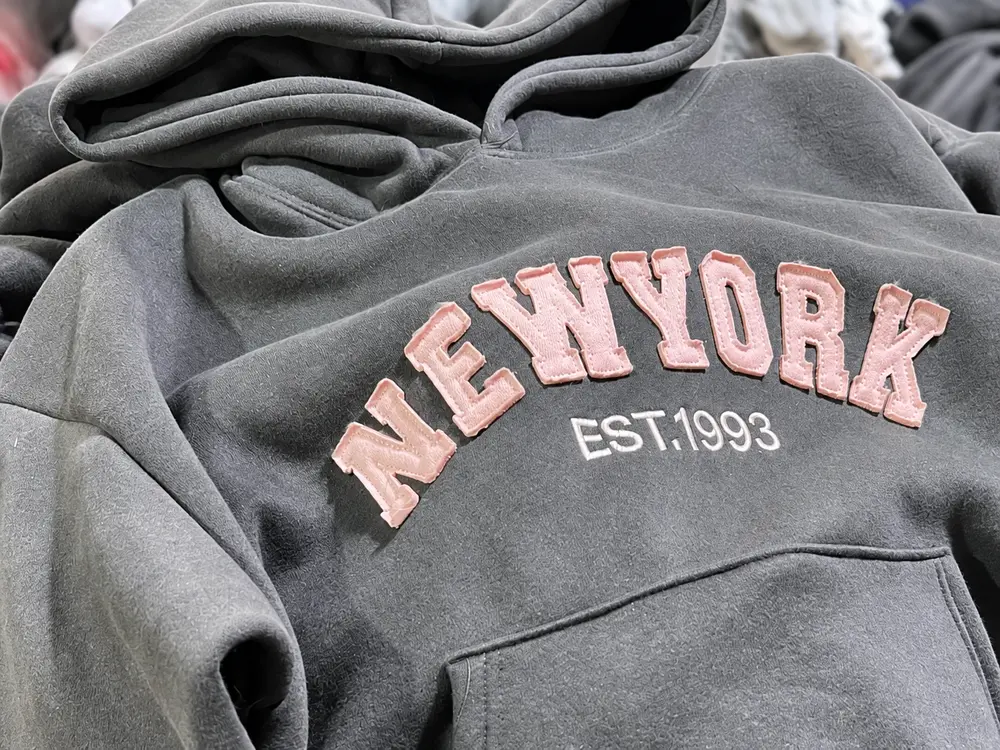
Ask to see work that shares the important features of your design.
For a washed graphic tee, look at the print surface, the garment color after washing and the condition of the neckline. For an appliqué hoodie, ask for close-ups of the fabric edges, stitching and surrounding material. A full-garment photo may look good while showing very little of the workmanship.
The factory does not need to have made your exact design before. It should, however, have experience with similar fabrics, garment construction or decoration techniques—and be able to explain how it would approach the unfamiliar parts.
To make that conversation useful, send:
- Design drawings, reference images or a tech pack.
- Fit and measurement requirements.
- Fabric preferences and decoration details.
- Estimated quantities by style and color.
- Your target price and delivery schedule, if you have them.
If a reference image is only for the fit, say so. Otherwise, the factory may assume you also want its fabric, print or wash effect.
You do not need to solve every technical detail before contacting a manufacturer. Mark anything you still need help with, such as fabric selection or the best way to reproduce a graphic.
How a Streetwear Manufacturer Should Review Your Design
“We can make it” is a starting point. The next reply should tell you how.
For one washed T-shirt project we reviewed at YX Custom Clothing, the customer wanted a relaxed, dropped-shoulder fit, detailed front and back graphics, a soft print feel and a vintage wash.
Our proposal addressed the fabric, printing method, artwork placement and washing sequence. It also separated what the customer could approve from a swatch or print test from what needed to be checked on the finished garment.
That gives a brand something concrete to assess. You can question a fabric choice, compare a print test with your artwork or decide whether the proposed finish suits your collection.
Fabric weight needs context
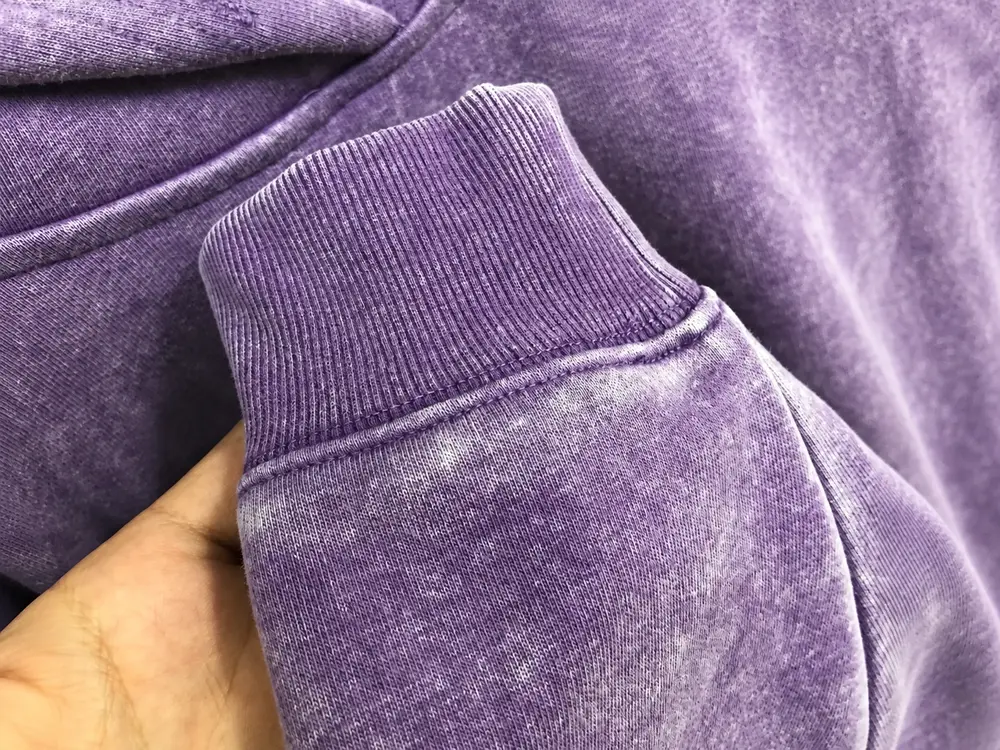
For that project, we quoted 100% cotton, 32s double-yarn fabric at 240 GSM before washing, with an expected weight of around 260 GSM after washing. The actual result still needed to be checked through sampling.
GSM measures the weight of one square meter of fabric. When fabric shrinks, its weight per square meter can increase. It does not mean washing adds 20 grams to the garment.
The figures above applied to that particular fabric and wash process. They are not a fixed rule for washed T-shirts.
When discussing fabric, ask whether the quoted GSM is before or after treatment. Then consider how the fabric behaves. If you want a boxy silhouette with some structure, simply choosing a heavier fabric may not give you the result you want. Softness, drape and construction matter too.
A swatch helps you assess the base fabric’s color, thickness and hand feel. If the design calls for garment washing, you will need a washed garment sample to judge the final finish.
The printing method should suit the artwork
The graphics in this project contained multiple colors, gradients and fine details. The customer also wanted a soft feel. We recommended direct-to-garment printing, or DTG, on the selected cotton fabric, followed by a print test.
A different design could call for screen printing, puff printing or another finish. The useful question is why the factory recommends a particular method for your artwork.
Ask to see the result on the intended fabric where possible. A printing method that works well on one material may need adjustments on another. If the garment will be washed after printing, the sample needs to show what happens after that step as well.
Check how the factory connects fit, artwork and finishing
Streetwear often depends on proportion. A graphic can be reproduced accurately and still look wrong because it sits too low, appears too small or gets lost in the garment’s volume.
For the T-shirt project, our plan was to place the graphics on the completed pattern at scale and send the layout for approval. This lets the customer see the print in relation to the neckline, body and hem before production.
Sizing across the range needs a decision too. If the same print dimensions are used from small through extra large, the larger garments will have more space around the artwork. Confirm whether that is the look you want.
The same attention is needed for fit. A dropped shoulder affects how the sleeve sits, so shoulder width, sleeve length and armhole shape need to work together. The factory’s pattern maker should develop the pattern from the agreed measurements and references.
You normally provide the design and fit requirements; you do not need to arrive with a finished production pattern.
Ask who will handle pattern development and grading, and who will turn your fitting comments into changes. Having a clear contact for those decisions makes revisions much easier.
Approve the result after all relevant processes
In our example, garment washing was planned after printing and sewing. The customer could review the print layout and test print first, but the completed washed sample would show the final appearance.
Approving an unwashed print alone would leave part of the design untested.
This becomes even more important when a garment combines printing, embroidery, appliqué or washing. Ask the manufacturer to explain the sequence and identify the sample that will represent the finished product.
Some decoration processes may be handled by specialist suppliers. Find out who coordinates their work, checks the results and resolves problems. You should have a direct contact who can follow the whole project, including the stages completed elsewhere.
Make sure the order conditions fit your business
A technically capable factory may still be a poor match for your first order if its quantities, prices or schedule do not work for you.
Start with a quantity breakdown. “100 pieces” could mean one color and one graphic, or several different combinations. Those orders require different material purchases and production setups.
For the washed T-shirt project, we recommended starting with 100 pieces per style, garment color, print design and wash finish. We also quoted a 50-piece option at a higher unit price. Mixed sizes were accepted without a separate minimum for each size.
That distinction matters: a recommended production quantity is not always the lowest quantity a factory can accept.
If a smaller run is possible, compare the total spending as well as the unit price. Ordering more to reduce the price per piece also means carrying more stock.
Compare quotes on the same specification
Before comparing prices, check that the factories have quoted the same fabric, print coverage, wash treatment and quantity.
A price for one front print is not directly comparable with a price that includes front and back graphics plus garment washing. Custom labels, packaging, freight and taxes also need to be accounted for.
For samples, ask what the development fee covers. Pattern making, artwork preparation, print tests and custom trims may be included or charged separately.
You should be able to see what you are paying for without having to guess which parts of your design were included.
Tie the schedule to actual approval steps
Ask when the quoted lead time starts.
If a print test needs your approval before the sample can be completed, find out how that affects the schedule. For bulk production, confirm which items must be approved before the production clock begins.
Give the factory your required arrival date, not just the date you hope production will finish. Sampling, revisions and shipping all need space in the plan.
Use your own sample to test execution
Previous work helps you build a shortlist. Your own sample shows how the manufacturer handles your requirements.
Check it against the agreed documents before deciding whether to proceed.
| Area | What to check |
|---|---|
| Fit and measurements | Key dimensions, proportions on the body and room for movement |
| Fabric and wash | Hand feel, color, thickness and appearance after treatment |
| Printing and decoration | Size, placement, color, detail and the surrounding fabric |
| Construction | Neckline, shoulder seams, cuffs, hems and internal seams |
| Agreed performance requirements | Results of the checks or tests specified for the product |
Use the same measurement methods as the factory. Body length measured from the high shoulder point is not the same measurement as length taken from the center back neck.
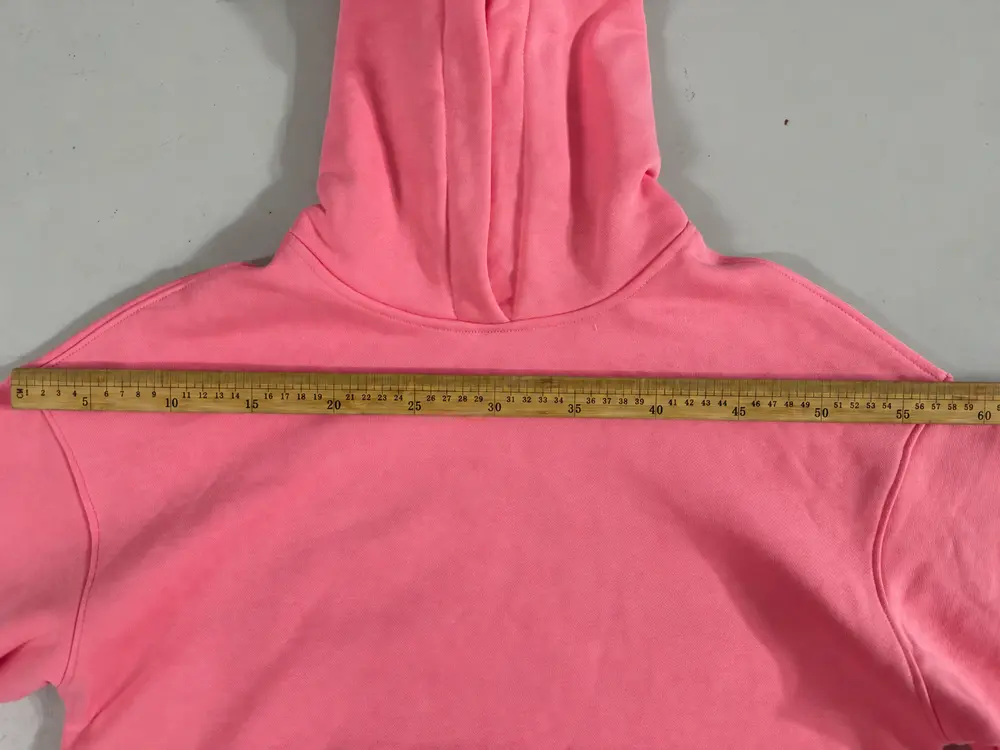
For a garment-washed style, confirm that the final measurement check applies to the washed garment. Agree on tolerances for the relevant measurements before judging whether the sample passes.
Pay attention to how revisions are handled
A first sample may need adjustments. What matters next is whether the factory understands your feedback and makes the changes correctly.
If a sample matches the approved size chart but you decide you want a shorter body, that is a fit revision. If it falls outside the agreed measurements and tolerances, that is a production issue. The two should be handled accordingly.
Send measured changes and clear photos in one set of comments. Ask the factory to confirm what it will adjust and whether another physical sample is needed.
Also clarify the cost. Updating a pattern or measurement sheet involves different work from cutting, printing, sewing and washing another garment.
If the same clearly documented issue keeps returning, resolve it before committing to bulk production.
Ask how the approved sample will carry through to bulk
A good sample is an important step. You still need to know how the factory will use it during production.
Before placing the order, confirm:
- Which sample and specification version are approved for production.
- How bulk fabrics and trims will be checked against the agreed requirements.
- Which checks take place during printing, sewing, washing and final inspection.
- How defects are corrected and rechecked.
- Whether you can arrange a third-party inspection.
For a printed, washed garment, ask whether test printing and relevant wash checks are completed before production printing begins. Test conditions should suit the fabric, decoration and intended product requirements. A temperature and duration used for one project should not automatically become the rule for every garment.
Material substitutions and artwork changes also need a clear approval process. The factory should tell you before making them.
Finally, agree on payment stages, shipping terms, any permitted variation in delivery quantities and how confirmed manufacturing defects will be handled. If quantities can vary, clarify whether approval is needed and how the final invoice will be calculated.
These details affect your budget and inventory just as much as the quoted unit price.
Discuss Your Streetwear Project with YX Custom Clothing
As a custom streetwear manufacturer, YX Custom Clothing reviews your design, fabric, fit and decoration requirements before recommending how to produce the garment. Pattern development, artwork preparation and design support are handled by the relevant members of our own team, with sampling used to check the proposed result.
If you are developing custom T-shirts or hoodies, browse our product examples, then send us your design drawings, reference images or tech pack. Include your planned colors, quantities and target price where available.