If you are trying to figure out how to find a clothing manufacturer in 2026, finding names is usually the easy part.
Google, Alibaba, sourcing directories and social media can give you dozens of suppliers in one evening. The harder part starts after the replies arrive.
Which factory actually understands your product?
Which quotation is based on the fabric you asked for?
Who is developing the sample?
And if the sample turns out well, can the same factory reproduce that standard across 300, 1,000 or 5,000 pieces?
New brands often spend most of their time comparing MOQ and unit price. Both matter, but they rarely tell the whole story.
Fabric selection, pattern accuracy, sample revisions, communication and bulk consistency usually reveal much more.
This guide is not simply about where to search for factories.
It is about what to look for once you find one.
1. Start With the Product, Not the Factory
A common mistake is searching for manufacturers before the product itself is clear.
“Custom clothing” is too broad.
Even “custom hoodie” still leaves a factory guessing.
Before contacting suppliers, try to define:
- Product category
- Knit or woven construction
- Fabric composition
- Approximate GSM
- Fit
- Number of colors
- Quantity per color
- Size range
- Printing or embroidery
- Labels and packaging
- Target quality level
- Target delivery date
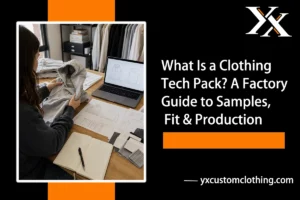
You do not need a perfect tech pack before the first conversation.
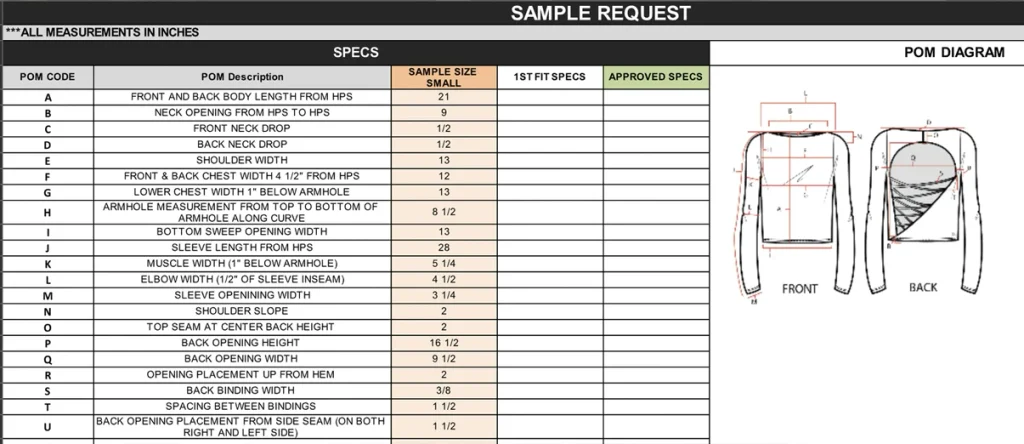
A clear front and back reference, basic measurements, fabric direction and quantity are already enough to make the discussion more useful.
What is difficult for a factory to work with is something like:
“I need a premium hoodie. Please send your best price.”
Premium can mean almost anything.
A 280 GSM cotton-poly fleece hoodie and a 450 GSM oversized cotton hoodie may look similar in a reference image, but they are not the same product.
Add a garment wash, heavier rib and puff print, and the production route changes again.
A factory that asks several technical questions before quoting usually gives me more confidence than one that sends a price within two minutes.
The first reply may be slower, but the quotation is more likely to be based on the actual product.
2. Do Not Search for a Factory That “Makes Everything”
Many apparel factory websites show long product menus:
T-shirts, hoodies, jackets, denim, dresses, sweaters, activewear, swimwear and sometimes even suits.
That does not mean the same production team is equally experienced with all of them.
A T-shirt factory may understand knit fabric, shrinkage, rib recovery and printing very well.
A sweater factory works with yarn, gauge, flat-knitting machines, linking and washing.
A technical outdoor factory may need seam-sealing machines, waterproof fabrics, bonding equipment and functional testing.
These are different production systems.
Instead of asking:
“Can you make this?”
ask:
“What type of product does your factory make most often?”
That answer is usually more useful.
A supplier may technically be able to produce a garment while still having very little experience making it repeatedly.
For basic casualwear, a broader OEM factory can work well.
For knitwear, technical outerwear or other specialist categories, product-specific experience matters much more.
3. Private Label vs. Full Custom Manufacturing
One reason brands get confused when comparing suppliers is that private label manufacturing can mean very different things.
Blank or Existing-Style Customization
This starts with an existing garment.
The supplier may allow you to add:
- Screen printing
- Embroidery
- Neck labels
- Hangtags
- Packaging
- Small color or trim changes
This route can be fast and practical, especially when the original fit already works for your brand.
Full Custom or Cut-and-Sew Manufacturing
This starts earlier in product development.
You may be changing:
- Pattern
- Fit
- Measurements
- Fabric composition
- GSM
- Custom color
- Rib structure
- Zippers
- Trims
- Washing
- Print placement
- Construction details
Two suppliers may both call themselves a private label clothing manufacturer, while one mainly decorates existing blanks and the other develops garments from fabric and patterns.
That difference should be clear before you compare quotations.
If you are still deciding which manufacturing model fits your brand, our 12 Best Private Label Clothing Manufacturers for Startups in 2026 guide compares suppliers with very different production models.
4. Where to Look for Clothing Manufacturers
There is no secret supplier list.
The useful part is knowing what each search channel is good for.
Google works best once you have a reasonably clear product direction.
Instead of searching only:
clothing manufacturer
try:
- custom hoodie manufacturer China
- private label streetwear manufacturer
- low MOQ womenswear manufacturer
- knitwear manufacturer China
- cut and sew clothing manufacturer
- clothing manufacturer for startups
The more specific the search, the fewer unsuitable factories you need to screen.
One thing worth remembering: the first factory on Google is not automatically the best factory.
Sometimes it simply has the best website.
Alibaba and B2B Platforms
Alibaba is useful for building an initial shortlist quickly.
You can compare categories, minimums and customization options without contacting each supplier from scratch.
The problem is that factories, sourcing companies and trading companies can look very similar online.
Use the platform to find candidates.
Do not use the supplier page alone as proof of production capability.
Trade Shows, Referrals and Existing Garments
Trade shows become useful when you already understand the product.
You can inspect fabrics, construction and samples in person instead of comparing only photos.
Referrals can also save time, but I still check the factory against the actual product.
A factory that worked well for somebody else’s denim line may still be wrong for your knitwear collection.
Existing garments are useful too.
Check:
- Country of origin
- Fabric composition
- Stitch construction
- Rib
- Zippers
- Print method
- Wash
- Finishing
Sometimes the garment itself tells you more about the production route than a supplier homepage.
5. Find Out Who Actually Controls Development and Production
I do not automatically avoid trading companies.
Some are good at sourcing, coordinating several factories and managing products that require different specialist suppliers.
The more useful question is:
Who actually controls your product?
A few questions usually reveal much more than an About Us page:
- Where will this order actually be produced?
- Do you have an in-house sample room?
- Who makes the patterns?
- Which processes are outsourced?
- Can you show the current production floor on a video call?
- Which product categories run through your production line most often?
- If my product falls outside your normal category, how would you handle it?
The last question is particularly useful.
A production team with real category experience normally understands its own limits.
A casualwear factory may tell you it outsources sweaters.
A knitwear specialist may tell you not to use them for denim.
That is not necessarily a weakness.
It shows that the supplier understands where its production control begins and ends.
What deserves more questions is an immediate:
“Everything is possible.”
before anyone has properly reviewed the product.
6. Do Not Compare Prices Before the Product Is Clear
Price comparison only works when the factories are quoting the same thing.
Take a hoodie as an example.
One quotation might use:
- 320 GSM cotton-poly fleece
- Standard rib
- Screen print
Another might use:
- 420 GSM cotton
- Custom-dyed fabric
- Heavy rib
- Enzyme wash
- Puff print
The second supplier may look expensive on paper, but it is not quoting the same garment.
For a useful quotation, send:
- Reference or tech pack
- Order quantity
- Number of colors
- Fabric requirement
- GSM
- Size range
- Printing or embroidery artwork
- Labels
- Packaging
- Delivery country
If you do not know the exact fabric, say that.
A manufacturer can suggest alternatives.
The problem starts when one factory prices a basic stock fabric and another prices a custom-developed fabric, while the buyer compares only the final unit price.
7. Understand What the MOQ Really Means
A supplier saying:
“MOQ 100 pieces”
does not tell you enough.
Ask whether that means:
- 100 per style
- 100 per color
- 100 per fabric
- 100 per print
- 100 total with mixed sizes
If MOQ is 100 pieces per color and you want four colors, your total order is 400 pieces.
Why MOQ Exists
MOQ is not only about sewing.
It may come from:
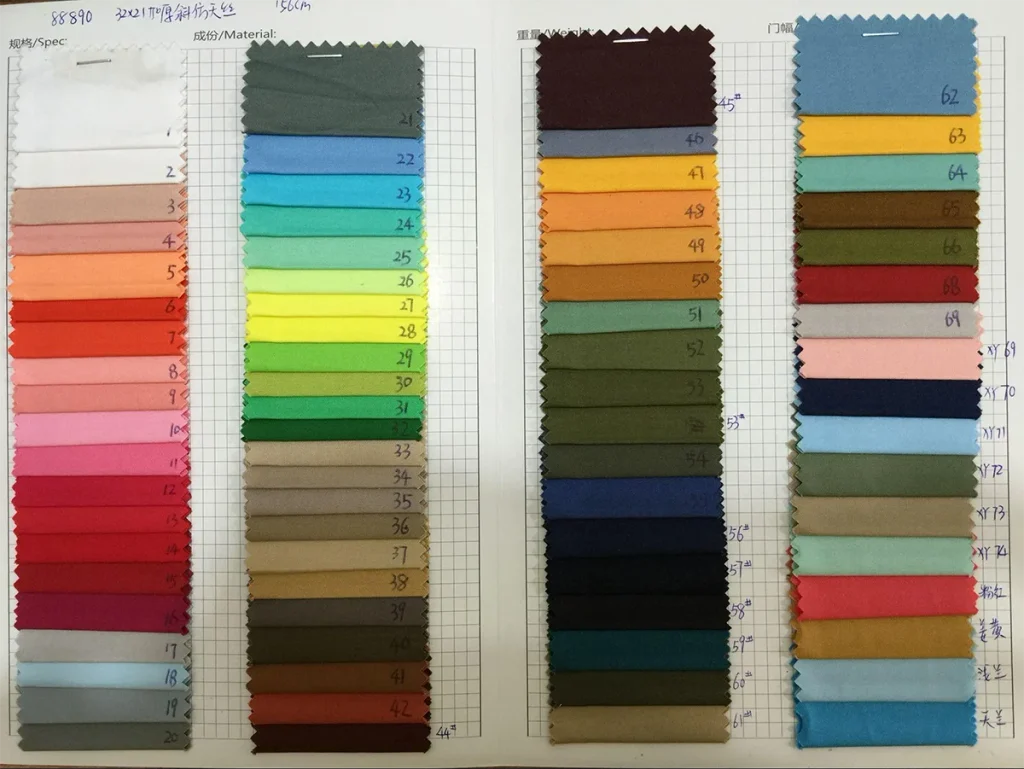
- Fabric dyeing minimums
- Fabric supplier requirements
- Printing setup
- Embroidery setup
- Trim purchasing
- Cutting efficiency
- Garment washing
- Production-line setup
This is why the lowest MOQ is not always the best option.
Reducing a 100-piece order to 30 pieces may lower inventory risk, but it can also reduce fabric choices, raise unit cost or force the factory to use available materials.
For a startup, the goal should be a workable MOQ, not simply the smallest number advertised online.
If MOQ is a major concern for your first order, see our Clothing MOQ Guide before deciding how many styles and colors to launch.
8. Use Sampling to Evaluate the Factory
A polished website tells you very little about how development will actually go.
Sampling tells you much more.
Fabric
Check:
- Weight
- Hand feel
- Stretch
- Surface
- Shrinkage
- Color
If you requested a specific GSM or composition, confirm that the sample actually uses it.
Fit
Measure:
- Chest
- Length
- Shoulder
- Sleeve
- Neck
- Front/back balance
Do not rely only on whether the garment looks good on a hanger.
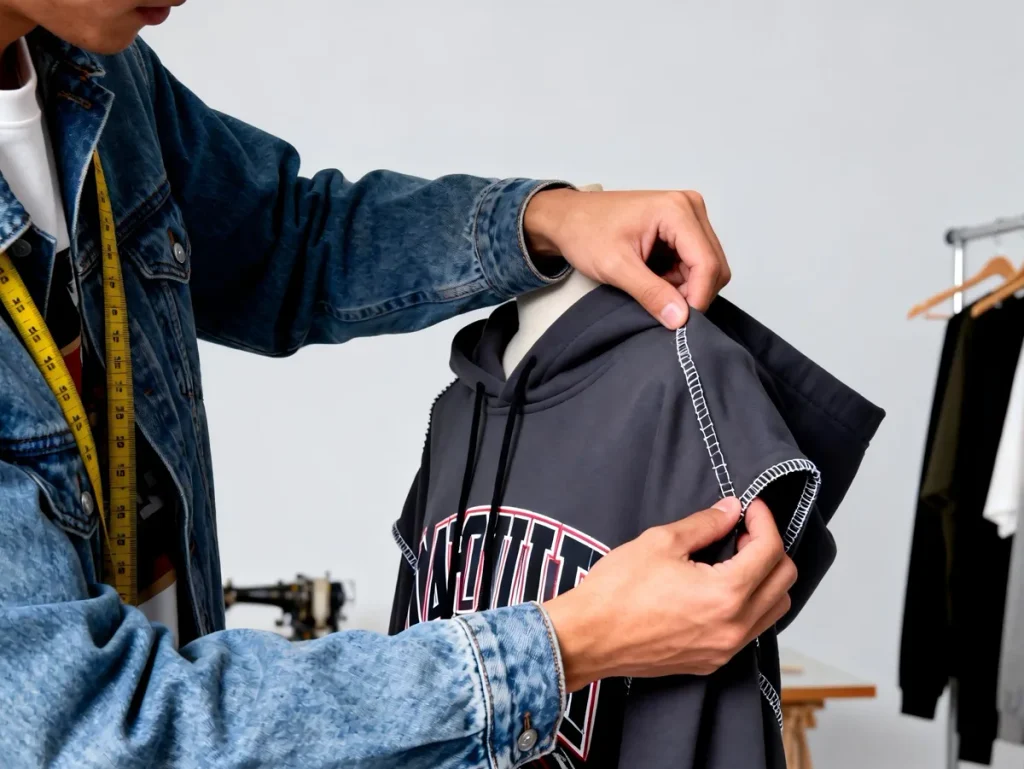
Construction
Look at:
- Stitching
- Seam allowance
- Neck shape
- Rib recovery
- Pocket position
- Zipper installation
- Hem stability
Printing and Embroidery
Check:
- Placement
- Scale
- Color
- Print hand feel
- Edge quality
- Embroidery density
- Fabric distortion
Then look at something less visible:
how the factory handles corrections.
The first sample being wrong is not always a deal breaker.
What matters more is whether the factory understands why it is wrong.
When the second sample comes back, I usually check the correction list before looking at the garment as a whole.
If the same problems are still there, that tells me more than a polished sales presentation ever could.
A factory that accurately fixes five issues on the second sample may be a better long-term partner than one that makes a visually impressive first sample but handles revisions badly.
For a deeper breakdown, see our Clothing Sampling Guide.
9. Compare the Same Product, Not Just Different Quotations
After the first round of screening, there is usually no reason to keep developing with ten factories.
Narrow the list.
If the project justifies the additional sample cost, test the same product with two shortlisted suppliers.
Use the same brief.
Compare:
- Sample accuracy
- Fabric sourcing
- Fit
- Construction
- Communication
- Revision accuracy
- Price transparency
- Actual sample timing
The same brief matters.
If one supplier develops a 300 GSM fabric and another uses 450 GSM, the quotations tell you very little.
Also pay attention to the second round.
Production rarely moves from first message to finished bulk goods without changes.
The way a supplier handles those changes is part of the service you are buying.
10. Confirm Bulk Production Before Approval
A good sample does not automatically mean bulk production will be good.
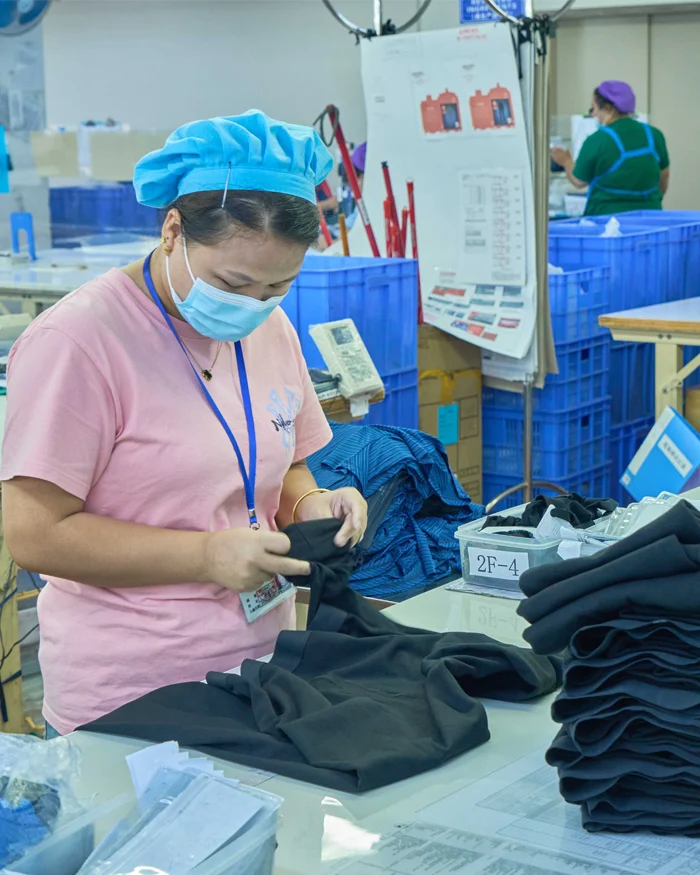
Before production starts, I want these points confirmed:
- Who purchases the bulk fabric?
- Will it come from the same source as the approved sample?
- Is bulk fabric inspected before cutting?
- Is there a pre-production sample?
- How are measurements checked during sewing?
- How are print colors approved?
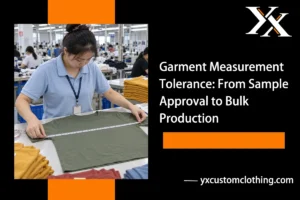
- What measurement tolerance is being used?
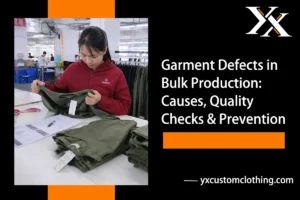
- How are defective garments handled?
- Is there a final inspection before packing?
One issue that deserves special attention is sample fabric vs. bulk fabric.
Sometimes a first sample is made from available material because the final bulk fabric has not yet been produced.
That can be completely normal.
The problem starts when nobody explains it.
Before bulk approval, make sure you know whether you are approving:
- Construction
- Fit
- Fabric
- Color
- Or all of them
A clear pre-production approval process avoids a lot of arguments later.
Our Custom Clothing Manufacturing Process guide explains what normally happens between approved sample and finished bulk order.
11. When Factory Location Actually Matters
I would not choose a manufacturer based on country alone.
Location matters when it changes how the product is developed or delivered.
Where Are the Fabrics and Trims Coming From?
A factory may sew the garment in one city while buying fabric, rib, zippers and labels from several other regions.
That affects:
- Material lead time
- Sampling speed
- Reorder speed
- Cost
- Color consistency
For some products, being close to a strong fabric and trim market can make development much faster.
Which Processes Stay In-House?
Printing, embroidery, washing, bonding and special finishes are often handled by specialist subcontractors.
That is common in apparel manufacturing.
The important question is not whether every process happens under one roof.
It is whether the main factory controls:
- Approval
- Scheduling
- Quality
- Rework
If embroidery is outsourced but the factory checks every lot properly, that can work well.
If nobody clearly owns the quality problem when something goes wrong, that is different.
Can You Inspect the Factory Easily?
For some brands, a factory visit matters.
For others, a live production video, sample-room call and third-party inspection may be enough.
The right level of verification depends on the order size and risk.
How Much Time Does Logistics Add?
A factory may quote a short production time, but that is not the same as a delivery date.
Material transport, export preparation and international shipping all need to be added.
For launch planning, I prefer one complete timeline rather than a fast-looking sewing time.
12. Red Flags Worth Paying Attention To
There are a few situations where I would slow the project down and ask more questions.
Every Product Gets an Immediate “No Problem”
You send a complex jacket.
“No problem.”
A sweater.
“No problem.”
Denim.
Still no problem.
A broad supplier network may genuinely be able to coordinate all three.
But it is worth finding out who is actually producing each product.
The Quote Keeps Changing Without a Technical Reason
Price can change legitimately when:
- Fabric changes
- Quantity changes
- Printing changes
- Construction changes
But the reason should be explainable.
If the quote changes repeatedly while the specification stays the same, clarify it before paying for a sample.
Nobody Can Explain the Fabric
“Good cotton” is not enough.
A supplier handling custom apparel should be able to discuss:
- Composition
- GSM
- Knit or weave
- Stretch
- Shrinkage
- Finish
You do not need a textile engineer on every sales call, but somebody on the team should understand the material.
Bulk Production Is Being Pushed Before the Sample Is Approved
Once fabric is purchased and cutting begins, changing the garment becomes much more expensive.
Finish sample corrections first.
Every Delay Comes With a New Story
Production delays happen.
Fabric can arrive late.
Printing can fail.
A sample can require another revision.
The important part is whether the supplier tells you early and gives you a realistic new date.
An uncomfortable answer early is easier to manage than a pleasant answer followed by a missed launch.
13. What I Would Do If I Started a Clothing Brand Today
If I were starting again from zero, I would make the first collection smaller than most founders want to make it.
Probably one or two core products.
Not ten or fifteen.
I would prepare a simple development package:
- Reference images
- Measurements
- Fabric direction
- Quantity
- Colors
- Decoration
- Target market
Then I would build a shortlist of several manufacturers.
After the first conversations, I would narrow that list quickly.
During sampling, I would watch:
- Does the factory understand the fabric?
- Does the sample match the requested measurements?
- Are the problems recorded correctly?
- Does the second sample actually fix them?
- Do quoted prices change for understandable reasons?
- Are promised dates realistic?
Then I would place a sensible first bulk order.
Not the biggest quantity I could afford.
Enough to test the real production process.
A supplier relationship should be built through development, bulk production and repeat orders.
The lowest quotation would not automatically win.
The biggest factory would not automatically win either.
14. Where YX Custom Clothing Fits
YX Custom Clothing is based in Dongguan, China and mainly works with startup and growing brands developing custom apparel rather than only adding logos to ready-made blanks.
A project can begin from:
- Tech pack
- Reference images
- Design drawings
- Existing garment
- Basic product concept
Our normal workflow can include:
- Fabric and trim sourcing
- Pattern development
- Sampling
- Printing
- Embroidery
- Labels
- Packaging
- Bulk production
- Quality inspection
- Shipping support
For many custom projects, our standard starting MOQ is around 100 pieces per color.
Sample development is commonly around 7–10 days, while bulk production is often around 10–20 days after sample approval.
More complicated fabrics, washing processes, construction or special materials can require different quantities or timelines.
We are usually a better fit for projects such as:
- Custom T-shirts
- Hoodies
- Sweatshirts
- Casualwear
- Tracksuits and sets
- Dresses
- Pants
- Jackets
- Printed apparel
- Private label collections
We may not be the right production partner if you need only a handful of pieces, highly technical industrial protective clothing, specialist tailoring or products outside our normal manufacturing categories.
That is something I would rather make clear before sampling starts.
A good factory relationship begins with knowing whether the product actually fits the factory.
Frequently Asked Questions
How do I find a clothing manufacturer for my brand?
Start with the product rather than the supplier.
Define the garment, fabric direction, quantity, colors and customization requirements. Then use Google, B2B platforms, referrals, sourcing networks and trade shows to build a shortlist.
Once you have several options, screen them by product specialization, MOQ, sampling ability and actual production control.
How do I find a clothing manufacturer for a startup in 2026?
A startup usually needs more flexibility than an established retail brand.
Look closely at:
- MOQ
- Product development support
- Sampling
- Fabric sourcing
- Communication
- Ability to handle repeat orders
A smaller development-focused factory can sometimes be a better fit than a very large production group.
What should I ask a clothing manufacturer before paying for a sample?
Before paying, confirm:
- Sample cost
- Fabric being used
- Whether the fabric is stock or custom
- Sample lead time
- Number of revisions included
- Printing or embroidery method
- Whether sample cost can be credited toward bulk production
- Shipping method
Also make sure the supplier has reviewed the product carefully enough to understand what is actually being sampled.
What is a reasonable clothing MOQ for a startup?
There is no universal number.
For many custom apparel projects, around 50–150 pieces per style or color can be workable.
But custom-dyed fabric, special trims, denim washing, technical materials or knitwear yarn can push the MOQ higher.
Do I need a tech pack before contacting a clothing manufacturer?
Not always.
A clear product reference, measurements, quantity, fabric direction and artwork can be enough to begin.
The more complicated the garment becomes, the more useful a complete tech pack becomes.
How can I compare samples from two clothing manufacturers?
Use the same development brief.
Ask both suppliers to work from the same measurements, fabric requirement, artwork and construction details.
Then compare:
- Accuracy
- Fit
- Fabric
- Sewing
- Decoration
- Revision quality
- Communication
- Actual timing
Do not compare two samples that were developed from different specifications.
How do I know whether a clothing manufacturer is legitimate?
Ask specific production questions.
Find out where the order will be made, who develops the pattern, whether samples are made in-house, which processes are outsourced and what products the factory runs most often.
Factory videos, registration information and product-specific technical answers can also help with verification.
Should I choose the cheapest clothing manufacturer?
Not before checking what is included in the quotation.
Make sure each supplier is pricing the same:
- Fabric
- GSM
- Construction
- Printing
- Quantity
- Labels
- Packaging
A low quotation is not useful if it is based on a different product.
Final Thoughts
Learning how to find a clothing manufacturer is mostly about learning what to check before you trust one with bulk production.
You are not only looking for someone who can make one good sample.
You need a supplier that understands the product, communicates clearly when something is wrong and can repeat the approved standard once the order moves into production.
For me, the three things worth watching most closely are:
Product fit. Communication. Repeatability.
If you are developing custom T-shirts, hoodies, casualwear or a private label collection, you can send YX Custom Clothing your tech pack, reference images, target quantity and fabric requirements.
We can review the project first, explain what is realistic, and decide whether it fits our production setup before sampling begins.
Send Your Tech Pack
Request a Project Review
Discuss Your Clothing Development
Related Resources
- 12 Best Private Label Clothing Manufacturers for Startups in 2026
- Clothing Sampling Guide
- Clothing MOQ Guide
- Custom Clothing Manufacturing Process
- Private Label Clothing Manufacturing
- Custom Printing and Embroidery
- About YX Custom Clothing